

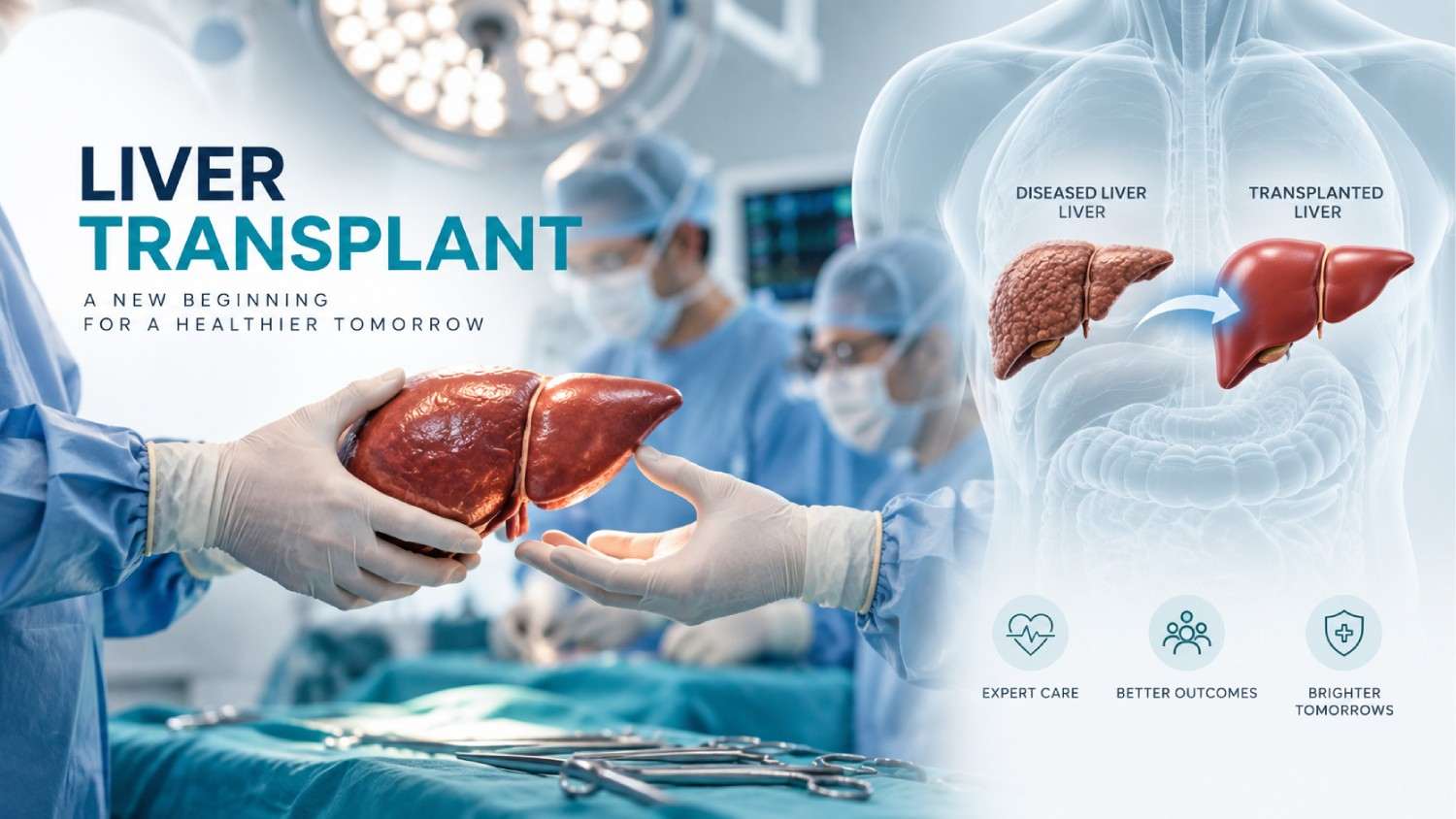
Understanding Liver Transplant
Liver transplantation is a major surgical procedure in which a diseased or severely damaged liver is replaced with a healthy donor liver or a suitable portion of one.
The liver performs many essential functions within the body, including supporting metabolism, processing nutrients and helping remove certain substances from the bloodstream. When severe liver disease significantly affects liver function, transplantation may become a treatment option for selected patients.
Liver transplantation involves replacing the diseased liver with a healthy liver or an appropriate portion of a donor liver. The decision to consider transplantation depends on several clinical factors and requires detailed assessment by a specialized transplant team.
The evaluation process may include medical history, physical examination, laboratory investigations and imaging studies. Patients and their families are also provided with information about the transplant process, potential risks and long-term follow-up.
Because every patient’s situation is different, liver transplantation should always be discussed with an experienced transplant specialist.